Ferdinand Urges Manchester United to Consider Benzema as Sesko Support
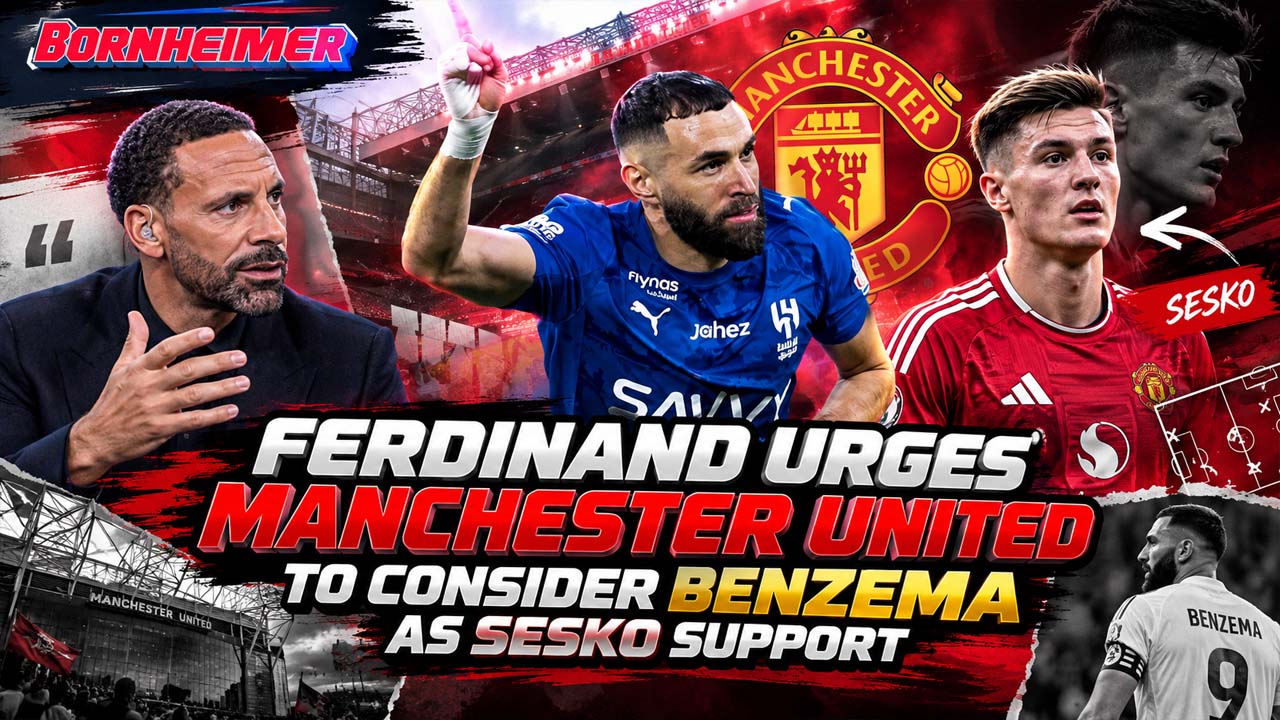
Bornheimer – Karim Benzema to United has emerged as a transfer discussion after Rio Ferdinand recommended the experienced forward. The former Manchester United defender believes his old club needs stronger support for Benjamin Sesko. However, Ferdinand’s suggestion does not establish that United have opened negotiations or submitted an offer. It raises a question about squad planning: could an experienced striker provide immediate cover while helping a younger forward develop? With Sesko’s availability causing concern, Ferdinand sees value in adding another dependable option at the front of the attack.
Sesko’s Absences Highlight the Need for Cover
Sesko’s reported injury problems have increased attention on United’s attacking depth. When the main centre-forward is unavailable, the team must find another way to organise its attack. That can involve changing personnel, adjusting positions or altering the approach entirely. Nevertheless, an absence should not become a permanent judgment about a young player’s reliability. The practical issue concerns how United manage the situation. A squad needs alternatives that allow it to compete without placing excessive pressure on one forward to remain available throughout the season.
Ferdinand Wants a Clear Focal Point in Attack
Ferdinand’s argument centres on the need for a forward who gives United a consistent presence up front. He believes several attacking players prefer dropping deeper to participate in build-up play. That movement can help possession, but it may also leave fewer options near goal. In tactical terms, a focal point gives teammates a target and occupies opposing defenders. However, that player still needs support. A striker becomes more effective when runners, passing angles and service allow him to influence the game.
Benzema Could Offer More Than Finishing
As a potential signing, Benzema would bring a profile that combines goalscoring with involvement in attacking combinations. This makes Ferdinand’s recommendation more interesting than a simple call for someone to remain inside the penalty area. A forward can connect play while still providing a central reference. The important distinction concerns timing: when to drop towards the ball and when to threaten the goal. In my view, United would need to assess that balance carefully. The ideal addition should complement the existing attack rather than duplicate its weaknesses.
Also Read : Argentina vs Burkina Faso Prediction: Messi Remains a Question Mark
Experience Could Help Sesko Develop
Ferdinand also sees potential value in an experienced teammate sharing the workload with Sesko. Training alongside a senior forward could create opportunities to discuss positioning, movement and decision-making. Nevertheless, mentorship should be treated as a possible benefit rather than an automatic outcome. It depends on the player’s willingness, the coaching environment and the relationship between teammates. The club would also need a clear role for both forwards. A veteran signing should provide useful competition while preserving a realistic development pathway for the younger striker.
Welbeck Offers a Useful Comparison
Danny Welbeck was another name Ferdinand mentioned when discussing experienced attacking support. The comparison helps explain the type of addition he has in mind: a senior forward who can contribute immediately and share responsibility. However, mentioning two names does not mean their availability, costs or tactical roles are identical. United would need to assess each option separately. My view is that the broader squad requirement matters more than the shortlist itself. The club first needs to define the minutes, responsibilities and qualities required from another striker.
Reported Free-Agent Status Does Not Mean a Free Deal
Benzema has been reported as available following his departure from Al-Hilal. Even so, a free-agent signing would still involve substantial considerations beyond a transfer fee. Wages, signing payments, contract length and fitness would all influence the decision. Registration requirements would also need checking before the club could establish when he might play. Therefore, availability alone does not settle whether a move makes sense. An experienced forward becomes a valuable addition only when his condition, expectations and role fit the club’s actual needs.
United Must Assess the Demands of the Role
Any potential move would require a realistic assessment of the physical demands placed on the striker. Pressing, repeated movement and recovery between matches can shape how much a forward contributes. Consequently, reputation should form only part of the evaluation. The manager would need to decide whether the player can perform the required role consistently. A carefully managed schedule might suit an experienced signing, but it also requires sufficient alternatives. United’s planning should address the whole attacking unit rather than assuming one arrival will resolve every problem.
A Short-Term Signing Needs a Clear Purpose
The strongest case for Benzema would involve a defined role supporting Sesko and providing another option when necessary. That could help United avoid repeatedly improvising at centre-forward. However, a short-term solution should also fit the club’s longer-term direction. Contract commitments and playing time can affect future recruitment. In my view, Ferdinand’s recommendation is most persuasive as a discussion about balance: immediate support alongside continued development. It becomes less convincing if the club relies on a famous name without first establishing how that player will improve the team.
A Recommendation Remains Different from a Confirmed Transfer
The Karim Benzema to United discussion currently rests on Ferdinand’s recommendation and reports about the striker’s availability. It should therefore remain separate from claims of an agreed move. The suggestion identifies a genuine planning question: how can United support Sesko while maintaining a reliable attacking presence? Benzema offers one possible answer, but the club would still need to assess fitness, finances and tactical suitability. The value of any signing will come from its contribution on the pitch, with experience serving the team’s needs rather than becoming the main attraction.