Arsenal Urged to Keep Viktor Gyokeres as January Sale Carries Risks
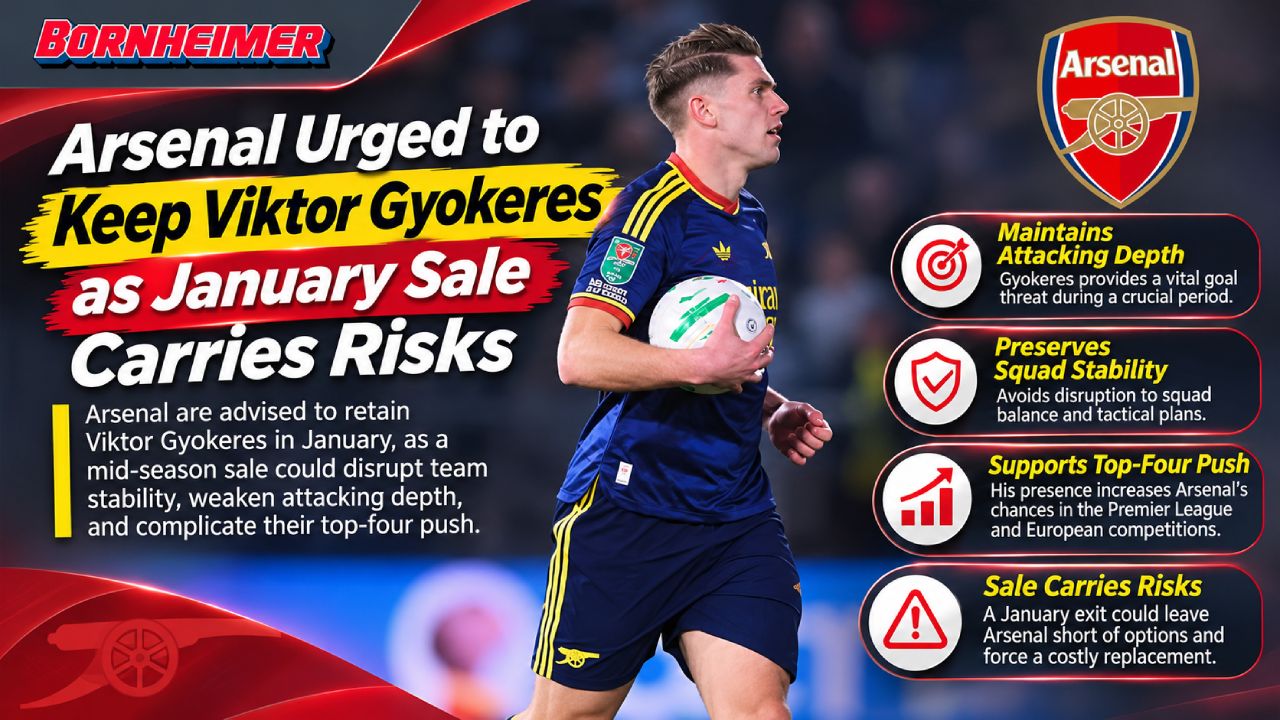
Bornheimer – The Arsenal Viktor Gyokeres transfer debate has prompted a warning from former Gunners striker Jeremie Aliadiere. He believes the club should avoid selling the Sweden international in January 2027 without securing a suitable replacement. His concern centres on squad depth rather than a demand to make Gyokeres first choice. A player can sit outside the preferred starting lineup and still provide valuable cover. That distinction matters as Arsenal consider their options for the second half of the season. A transfer fee might offer an immediate financial benefit, but losing an experienced striker could create a separate sporting problem. Aliadiere’s assessment highlights that tension. However, his comments represent an opinion about Arsenal’s planning, rather than confirmation that the club has decided to sell.
Limited League Starts Put Gyokeres Under Scrutiny
Gyokeres has reportedly started just one Premier League match this season, with Kai Havertz ahead of him in Mikel Arteta’s attacking plans. For a striker seeking regular involvement, that situation naturally raises questions about his role. Nevertheless, a limited number of starts does not establish every detail of the manager’s thinking. Selection can reflect tactical preferences, opposition, fitness, and the balance of the team. It also remains different from a confirmed decision to make a player available for transfer. From Gyokeres’ perspective, the challenge is to turn opportunities into a stronger claim for minutes. For Arsenal, the question is whether his current role provides enough value to justify keeping him through the winter window.
The Slavia Prague Display Keeps His Contribution Relevant
Gyokeres helped Arsenal beat Slavia Prague 2–1 in the Champions League, offering a timely reminder that he can influence important matches. That contribution adds substance to the discussion about his future. However, one performance cannot settle a broader question about selection or long-term suitability. Equally, limited league involvement should not erase a useful display in Europe. Both points can be true at the same time. My assessment is that Arsenal should evaluate the pattern of his contributions alongside the opportunities he receives. Judging a striker only by his place in the preferred lineup risks overlooking what he can offer in rotation. Meanwhile, one strong evening does not automatically resolve the reasons another player usually starts.
Havertz Cover Is Central to the Warning
Aliadiere’s clearest concern involves the possibility of Havertz becoming unavailable after a Gyokeres departure. He argues that Arsenal could leave themselves short of recognised centre-forward options. This is a hypothetical squad-planning risk, not a prediction that Havertz will suffer another injury. Clubs cannot know exactly when availability problems will arise, but they can assess how well their squads could respond. Selling a rotation striker changes that calculation immediately. In my view, the important issue is the quality of the alternative plan. Arsenal would need to understand who could lead the attack and how that choice would affect other positions. Depth has practical value even when the first-choice player remains fit.
Also Read : Qatar’s Global Sports Ambitions: Investment, Prestige, and Sportswashing Debate
Aliadiere Questions the Fit with Arsenal’s Approach
Despite advising caution over a sale, Aliadiere also questions whether Arsenal’s current approach suits Gyokeres. He believes the striker needs quicker service to make better use of his strengths. In that assessment, the problem extends beyond the player’s individual execution. Teammates must recognise his movements and release the ball at useful moments. However, this remains Aliadiere’s interpretation rather than an established explanation for every difficult appearance. A striker’s effectiveness depends on several connected actions, including positioning, passing angles, and timing. My view is that tactical fit deserves attention before the debate becomes a simple judgement of ability. A player may contribute differently when the team creates situations that suit his preferred movements.
A Replacement Must Offer More Than a New Name
If Arsenal consider selling, identifying another striker would only begin the process. The club would also need to assess availability, cost, readiness, and suitability for Arteta’s requirements. A replacement could have an attractive record yet still need time to understand teammates and tactical expectations. January also divides the season rather than offering a full summer preparation period. Consequently, the timing of any change matters alongside the identity of the incoming player. Aliadiere’s warning makes sense as a question of sequencing: what happens if an outgoing deal completes before the intended arrival? Arsenal would need a workable answer. A planned upgrade offers little immediate protection if the squad loses an option before the new player joins.
Financial Value Needs a Sporting Comparison
A strong offer could make a Gyokeres sale worth considering, but the transfer fee should not stand alone. Arsenal would need to compare the proceeds with the cost and likely contribution of a replacement. Wages, contract length, and the effect on squad balance would also shape the decision. Moreover, retaining a player can carry value through appearances, rotation, and cover that never appears directly in a transfer headline. That does not mean keeping him must always be the correct choice. Rather, it means a sensible assessment should compare complete options. In my view, the strongest case for selling would combine acceptable financial terms with a credible football plan. Either element on its own would leave questions unanswered.
Arsenal’s Next Steps Will Clarify the Transfer Picture
The January window will provide a clearer test of the speculation surrounding Gyokeres. Until Arsenal announce a decision or a concrete agreement emerges, his departure remains uncertain. Aliadiere’s comments identify a risk rather than reveal the club’s final strategy. Arteta must weigh immediate cover against the possibility of improving the attack through a change. Meanwhile, Gyokeres’ involvement before the window could influence how the discussion develops. Consistent contributions would strengthen the argument for preserving his role, although selection remains the manager’s responsibility. The central issue is straightforward: Arsenal should know how they would replace his contribution before removing it. A carefully planned decision would serve the squad better than a move driven only by limited starts or short-term frustration.