Portugal Without Cristiano Ronaldo: Denmark End the Winning Run in Braga
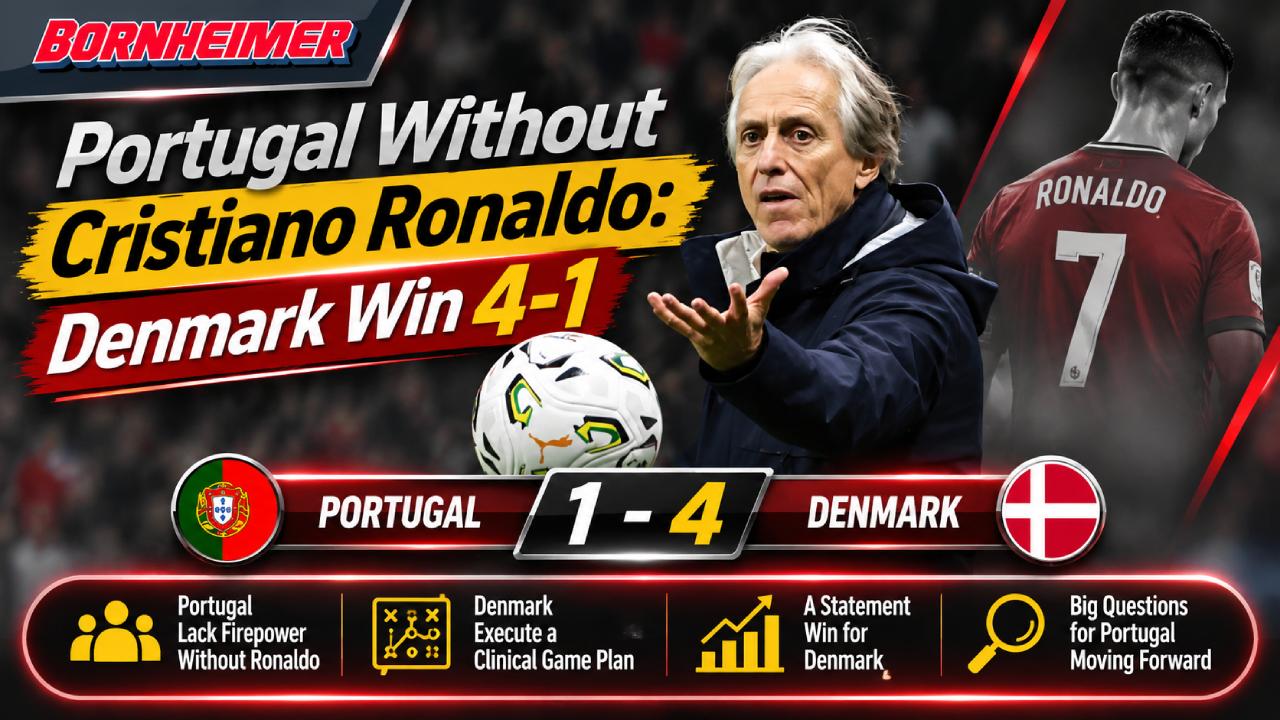
Bornheimer – The first match for Portugal without Cristiano Ronaldo began with a tribute to the former captain. It ended with a 4-1 home defeat to Denmark. Before kick-off at the Estádio Municipal de Braga, Portugal’s players wore shirts bearing Ronaldo’s name and number seven during the national anthem. The mood changed once the Nations League match got underway. Denmark found space in dangerous areas, and Rasmus Højlund scored twice as the visitors ended Portugal’s four-match winning run. The result made for a difficult start to the post-Ronaldo era. Yet the timing tells only part of the story. Ronaldo’s retirement explained the emotion surrounding the game. Portugal’s difficulty containing Denmark, especially after half-time, offered a more immediate explanation for the scoreline.
Denmark Reverse the Result from Copenhagen
Portugal had already beaten Denmark 4-2 in Copenhagen during the group stage. That result gave Jorge Jesus a useful point of comparison after the defeat in Braga. He felt Portugal had defended better as a team in the first meeting. This time, Denmark took advantage when Portugal struggled to close spaces and keep their lines connected. Across the two matches, the teams scored 11 goals between them, but the balance shifted sharply in the return fixture. The earlier win showed Portugal could hurt this opponent. However, it offered little protection once Denmark found room to move the ball through midfield. The contrast also helps explain why Jesus focused on the team’s defensive organisation. The most revealing difference between the two performances was how much freedom Denmark had when they moved forward.
Portugal Lose Their Shape After Half-Time
Jesus singled out the second half as the period when Portugal struggled most to stop Denmark’s attacks. Once the visitors advanced, the hosts found it difficult to close the gaps as a unit. That distinction matters because a defensive problem can start well before the ball reaches the back four. For example, when one midfielder presses ahead unsupported, the next pass can take several players out of the game. The defenders then face a choice: step forward and risk leaving space behind, or hold their positions and let an opponent carry the ball closer to goal. Portugal’s review of the match should therefore start before the final pass or shot. How Denmark reached those positions offers a better clue about what needs to change than the score alone.
The Space Between the Lines Works Against Portugal
Portugal wanted their second striker to find room between Denmark’s midfield and defence. In theory, a clean pass into that space gives the receiver time to turn, play a teammate through or draw a defender out of position. According to Jesus, Portugal did not get enough from that part of their plan. Meanwhile, Denmark found room to move into the final third and punished the hosts with two goals in the sequence he highlighted. The two problems are linked. If Portugal cannot make a pass through the middle stick, nearby players may already be moving forward when possession changes hands. As a result, the opponent can attack the space they leave behind. Portugal need both a reliable outlet between the lines and enough cover to respond when the pass fails.
Also Read : BTS Transforms Singapore’s National Gallery Into a Unique Art, Food, and Music Experience
Højlund Makes Denmark’s Midfield Advantage Count
Højlund’s two goals gave Denmark a clear reward for their work further back. The striker’s contribution stands out on the scoresheet, but Jesus also credited the visitors for how well they played in possession. That matters when assessing what Portugal can fix. A team can pay closer attention to a centre-forward and still concede chances if his teammates have enough time to pick a pass. Conversely, putting the supplier under pressure can make the striker’s next action harder. Denmark’s threat was therefore a collective one, even if Højlund supplied the most visible finishing touch. Braga was a reminder that good defensive work often happens several seconds before a shot. Once a forward receives the ball in a favourable position, the chance to prevent the danger may already have passed.
Jorge Jesus Addresses the Blow to Confidence
Portugal arrived in Braga with four consecutive wins, so the scale of the defeat made it harder to absorb. Jesus acknowledged the emotional impact while giving Denmark credit for their performance. Both points are useful. A team can recognise that it played poorly without treating one night as proof that its previous progress has disappeared. At the same time, the winning run cannot excuse what happened after the break. The clearest response would be visible in small decisions: when a midfielder chooses to press, how quickly teammates close the gap, and whether the team settles after losing possession. Those details give players something they can act on straight away. For Portugal, rebuilding confidence starts with making the next difficult spell in a match easier to manage.
What Portugal Can Learn From Their First Match Without Ronaldo
Ronaldo’s retirement invites questions about who will lead the attack. However, the Braga defeat also showed why replacing a captain cannot be reduced to finding another goalscorer. Portugal had trouble connecting midfield with attack and protecting space when Denmark moved forward. Putting a different name at centre-forward would leave both issues unresolved. A more useful question is how responsibility will be shared. One player can drop to receive the ball, another can threaten the space behind the defence, and a midfielder can stay close enough to react if possession turns over. Those tasks matter regardless of who starts up front. The next few matches will offer a better test of how Portugal distribute those roles than a single defeat on a night already heavy with emotion.
Wales Offer an Immediate Test of Portugal’s Response
Despite the defeat, Portugal remain top of their Nations League group with 12 points, three ahead of Denmark, with one round left. They now travel to Wales, while Denmark host Norway. The standings give Portugal a clearer task than the mood in Braga might suggest: a point in Wales would secure first place. Even so, the next match is also a chance to show what has changed. Watch how Portugal react the first time Wales play through their press, or how quickly the midfield resets after an attack breaks down. Those moments should reveal whether the team has learned from the spaces Denmark exploited. If Portugal stay connected when the game turns against them, that will say more about their response than an early goal alone.