Declan Rice Responds to Souness Over His Role in Arsenal’s Midfield
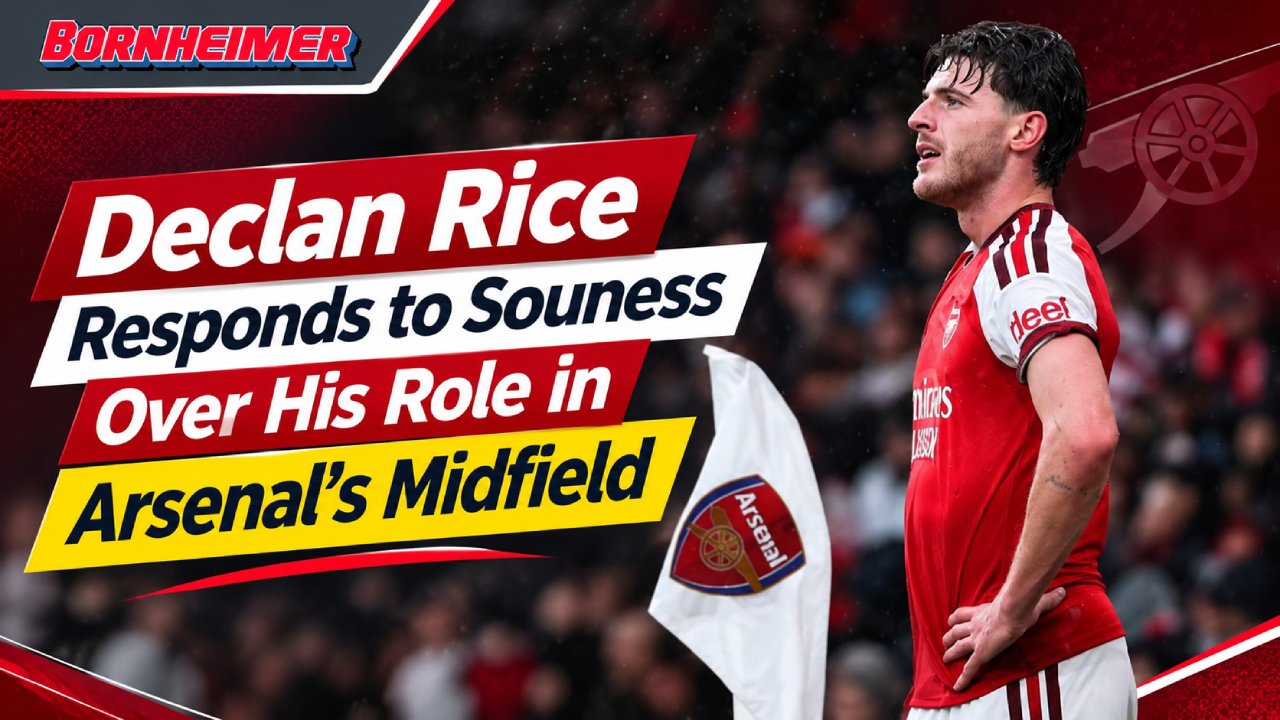
Bornheimer – Declan Rice has defended his habit of dropping deep after former Liverpool midfielder Graeme Souness questioned his role at Arsenal. Speaking before England’s UEFA Nations League match against Spain, Rice argued that moving towards his centre-backs can help the team build attacks. Souness sees the same movement differently. He believes Rice spends too much time near the defence and should offer more from midfield. England went on to beat Spain 3-2, but that result does not settle a debate about Rice’s club role. The more useful question is what happens after he drops deep. If his movement draws an opponent away and opens a passing lane, it can help Arsenal advance. However, if he receives the ball without changing the shape of the press, the move may add little.
Souness Has Questioned Rice’s Role Since His West Ham Days
Souness has raised similar concerns since Rice played for West Ham. In 2023, he argued that a complete midfielder should defend, create chances and score goals. At the time, he felt Rice had convincingly shown only the defensive part of that brief. His more recent criticism focused on where Rice receives possession. He pointed to occasions when the Arsenal midfielder stands between the centre-backs or moves into the gap next to a full-back. Souness’s point is worth testing against the alternatives. If the defenders already have time and space, an extra player on their line may leave midfield short of a passing option. However, against a team pressing high, that same movement can give Arsenal a route out. The position alone tells you less than the problem Rice is trying to solve.
Why Rice Used Harry Kane to Make His Point
Rice cited Harry Kane as an example of a player who moves away from his nominal position to help the team. Kane can leave the front line and come towards the ball when his team needs another passing option. That movement may tempt a defender to follow him and give a teammate room to run behind. Rice’s job is different, but his comparison makes a useful point. Where a player starts on the team sheet does not dictate where he should receive every pass. Still, Kane dropping deep works best when someone else gives the team a threat up front. Similarly, when Rice moves towards his defenders, another Arsenal player needs to offer a way forward. The value of either move depends on what teammates do in response.
How Dropping Deep Can Help Arsenal Beat a Press
Imagine two opposing forwards closing down Arsenal’s centre-backs. If Rice drops alongside the defenders, Arsenal can briefly have three passing options against two pressers. One forward then has to decide whether to follow Rice or stay with a defender. That decision can open a lane into midfield. However, Arsenal still need someone in position to receive the next pass. If another midfielder also drops, the team may gain an easy pass near its own goal while losing the option to move forward. As a result, judging the move means watching more than the first touch. Look at which opponent leaves his position and where Arsenal’s next receiver stands. A simple pass can be effective if it draws pressure to one side and helps a teammate advance on the other.
Also Read : BTS Transforms Singapore’s National Gallery Into a Unique Art, Food, and Music Experience
Rice Uses Goals and Assists to Answer the Centre-Back Label
Rice responded to the centre-back comparison with a joke: his attacking numbers would be rather good for a defender. The point behind it was straightforward. His contribution does not end when Arsenal move out of their own half. Since the start of the 2025/26 season, the figures cited in the debate put him at six goals and 16 assists across 66 Arsenal appearances. That tally gives some weight to his response, though it does not explain the origin of every chance. An assist from a set piece, for instance, says something different about a midfielder’s role from an assist in open play. The numbers show Rice can provide a final pass or finish. To understand how often his deeper positioning helps Arsenal get into those situations, you still have to watch the build-up.
What the Comparison With Ødegaard and Arsenal’s Defenders Shows
Over the same period, Martin Ødegaard recorded six goals and nine assists in 53 appearances. William Saliba had one goal and one assist in 50 games, while Gabriel registered five goals and five assists in 66. Alongside Rice’s tally, those figures illustrate why a player’s position during build-up does not necessarily describe his contribution across an entire match. Even so, comparing raw totals has limits. Appearances do not account for minutes played, and each player has different responsibilities. Centre-backs, for example, may pose an attacking threat from corners without regularly creating chances in open play. Likewise, Rice’s higher assist total in this sample does not establish that he is a better creator than Ødegaard. It does challenge the narrower suggestion that Rice contributes little once Arsenal get forward.
The Trade-Off Arsenal Face When Rice Moves Back
Dropping deep can solve a problem in one part of the pitch and create another farther forward. If Rice leaves midfield, Arsenal need a teammate to fill the space or a pass that bypasses it. Otherwise, the defence may circulate the ball comfortably while the forwards wait for service. On the other hand, keeping Rice higher up can be ineffective if nobody can get the ball to him. That is why judging his role by how close he stands to the centre-backs can be misleading. Against a high press, coming short may help Arsenal take control. Against a compact opponent that is happy to let the defenders pass sideways, staying higher may offer more. Souness’s criticism is strongest when Rice’s movement leaves Arsenal with fewer useful options ahead of the ball.
What to Watch the Next Time Rice Drops Deep
Rice made clear that he cannot change Souness’s opinion and would rather concentrate on his performances. The next Arsenal match offers a practical way to judge their disagreement. When Rice comes short, watch the nearest opponent first. Does that player follow him, or can the opposition keep its shape? Then look for the next Arsenal player to receive the ball. If he can turn and advance, Rice’s movement may have created an opening even if his own pass looked routine. Conversely, if the ball goes back to the goalkeeper and Arsenal face the same pressure again, the concern about playing too deep carries more weight. Following those few seconds reveals something the final goals and assists cannot: whether Rice’s positioning actually helped his team move the ball forward.