Xavi Becomes Netherlands Head Coach Through the 2030 World Cup
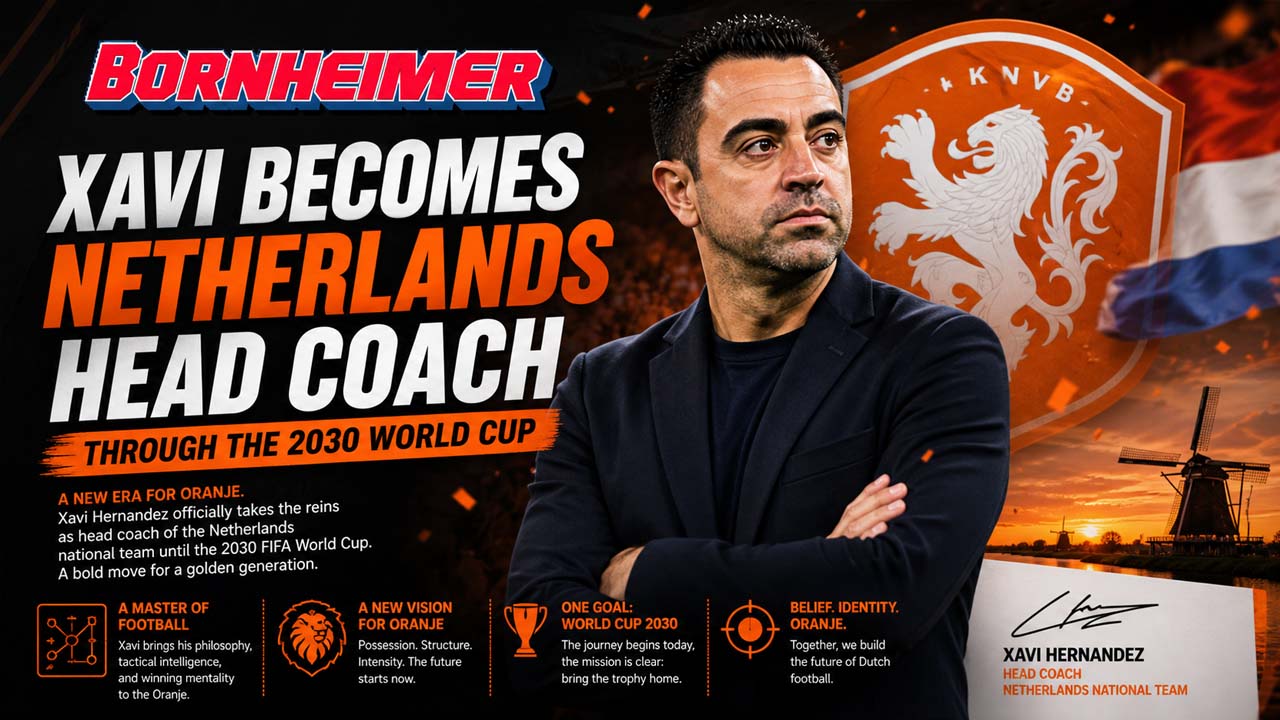
Bornheimer – Xavi Netherlands Head Coach is now the headline of a fascinating new chapter for Oranje. The former Barcelona manager has taken charge of the national team following Ronald Koeman’s departure. His contract runs through the 2030 World Cup, giving him time to build a long-term project. For Xavi, the appointment also represents a return to coaching after two years away from the touchline. He last managed Barcelona in 2024. Now 46, he enters international football with experience from both Barcelona and Al Sadd. More importantly, his football identity has deep connections with Dutch ideas about possession and attacking play. The challenge, however, will be different from club management. International coaches have less time with their players. Therefore, Xavi must communicate his ideas quickly while still producing results. Euro 2028 will provide the first major test before attention turns toward the 2030 World Cup.
Netherlands Seek a Fresh Start After World Cup Disappointment
The coaching change comes after a disappointing 2026 World Cup campaign for the Netherlands. Oranje exited in the round of 32 after losing to Morocco in the tournament staged across North America. For a nation with such a rich football tradition, the early elimination inevitably created questions about the team’s direction. Consequently, a new coaching project offers an opportunity to rebuild confidence. Xavi inherits a team that still has a strong foundation, but he must turn individual quality into a more consistent collective structure. His long contract could help because major tactical changes rarely happen overnight. At the same time, international football provides little room for prolonged experimentation. Every competitive match carries significant consequences. Therefore, Xavi must balance development with immediate expectations. His early selections and tactical decisions should reveal how quickly he intends to reshape Oranje. The objective is clear: restore competitiveness while developing a recognizable identity capable of surviving the pressure of major tournaments.
Dutch Football Has Deeply Influenced Xavi’s Philosophy
Although Xavi is one of Spain’s most celebrated football figures, his tactical education has strong Dutch roots. Barcelona’s football philosophy was transformed by Johan Cruyff, whose ideas shaped generations of players at the Catalan club. Rinus Michels also left an enduring influence through his approach to collective movement and attacking football. Moreover, Xavi worked under Louis van Gaal and Frank Rijkaard during his playing career at Barcelona. Those experiences helped shape his understanding of positional play, possession, space, and tactical discipline. As a result, taking charge of the Netherlands feels less unusual than it might initially appear. Xavi has described Dutch football as having a special connection with his own development. Nevertheless, historical connections alone will not guarantee success. Modern international football demands tactical flexibility as well as philosophy. Xavi must adapt his preferred ideas to the strengths of the available players instead of simply recreating the Barcelona model with a different national team.
Also Read : Nazi Shipwrecks Emerge From the Danube as Extreme Drought Exposes Wartime History
Attacking Football Will Be Central to Xavi’s Oranje
The appointment of Xavi Netherlands Head Coach immediately raises expectations about playing style. Xavi has consistently favored football built around possession, positional discipline, creativity, and control. Those principles fit naturally with the Netherlands’ traditional identity. Oranje have long been associated with brave attacking football and intelligent movement. However, modern tournaments also reward teams that can change their approach quickly. Possession without penetration can become predictable. Likewise, aggressive attacking structures can leave dangerous spaces during defensive transitions. Therefore, Xavi’s biggest tactical task will involve finding balance. He needs a team capable of controlling the ball without becoming vulnerable when possession is lost. Furthermore, Oranje must become efficient around the penalty area. Attractive football matters, but tournament matches are often decided by small moments. Xavi has already made clear that winning remains the priority. Ideally, he wants victories to arrive through football that supporters can recognize, understand, and enjoy.
Barcelona Experience Gives Xavi Valuable Lessons
Xavi brings meaningful coaching experience despite still being relatively young for a manager. His coaching career began at Al Sadd in 2019, where he won seven trophies before returning to Barcelona in 2021. Managing the Catalan giants brought an entirely different level of scrutiny. Every defeat generated pressure, while every tactical decision attracted intense analysis. Nevertheless, Xavi guided Barcelona to the 2022-23 LaLiga title and also won the Spanish Super Cup in 2023. Those achievements showed his ability to build a competitive side during a complicated period for the club. His Barcelona experience should prove useful with the Netherlands. He has already managed established stars, emerging prospects, and demanding dressing-room dynamics. However, international management presents another challenge. Instead of months of continuous training, Xavi will often have only a few sessions to prepare his team. Therefore, simplifying complex tactical concepts without losing their effectiveness could become one of his most important skills.
Euro 2028 Will Provide the First Major Examination
Before the 2030 World Cup arrives, Euro 2028 will serve as the first major benchmark for Xavi’s project. The tournament gives him enough time to develop his preferred structure while assessing which players fit his plans. In addition, the qualification period should provide valuable opportunities for tactical experimentation. Xavi can use those matches to build partnerships and introduce younger players gradually. However, expectations around the Netherlands will remain high. Oranje supporters will want visible progress long before the tournament begins. Therefore, performances during qualifying could become almost as important as results in shaping confidence around the project. Squad management will also be crucial. International teams must combine experienced leaders with emerging talent without disrupting balance. If Xavi manages that transition successfully, Euro 2028 could become an important stepping stone. A strong tournament would reinforce belief in his methods. More importantly, it would provide a mature foundation for the longer journey toward the 2030 World Cup.
World Cup 2030 Becomes the Ultimate Long-Term Target
A contract running through the 2030 World Cup gives Xavi something increasingly valuable in modern football: time. Over several years, he can shape the squad through more than one generation of players. Some current stars may remain central to the project, while younger prospects could develop into key figures. Therefore, Xavi’s responsibility goes beyond choosing the strongest starting eleven. He must establish a sustainable system that continues working as personnel changes. The Netherlands also carry a unique emotional relationship with the World Cup. Oranje reached the final in 1974, 1978, and 2010, yet the trophy has remained elusive. That history inevitably creates ambition whenever another tournament approaches. Xavi will understand the scale of that expectation. His task is not simply to qualify for 2030. Instead, the broader objective will be to build a team capable of competing deep into the tournament. Four years of preparation gives him a meaningful opportunity to pursue that goal.
International Management Will Test Xavi in New Ways
Becoming Xavi Netherlands Head Coach means adapting to a completely different working rhythm. At Barcelona and Al Sadd, he could train players regularly and correct tactical details throughout the season. With Oranje, preparation windows will be much shorter. Players will arrive from different clubs, tactical systems, and physical conditions. Consequently, Xavi must make every training session productive. His instructions need to be detailed enough to create structure but simple enough for players to absorb quickly. Squad selection will also become an important part of his work. Club reputation alone cannot determine international places. Current form, fitness, tactical suitability, and chemistry must all influence his decisions. Moreover, injuries before major international windows can suddenly change carefully prepared plans. These factors make national-team coaching uniquely challenging. Still, Xavi’s understanding of positional football could help him establish clear principles. If players understand those principles, Oranje may retain their identity even when individual personnel change.
Xavi’s Appointment Brings New Hope to Dutch Football
Xavi’s arrival creates genuine intrigue because his football background connects naturally with the Netherlands’ historic identity. His admiration for possession, positional intelligence, and attacking football fits many of the principles traditionally associated with Oranje. At the same time, his success will ultimately depend on more than tactical philosophy. He must build trust, manage different personalities, develop younger players, and deliver results under tournament pressure. Euro 2028 represents the first major destination, while the 2030 World Cup remains the defining long-term objective. The journey between those tournaments will determine whether this partnership fulfills its promise. For Dutch supporters, the most exciting possibility is not simply seeing their team win again. It is seeing Oranje compete with confidence and a clear football identity. If Xavi can combine beauty with efficiency, his appointment could become the beginning of one of the most compelling international football projects of the coming years.