Carlos Baleba Stands Out as Manchester United Settle for Leeds Draw
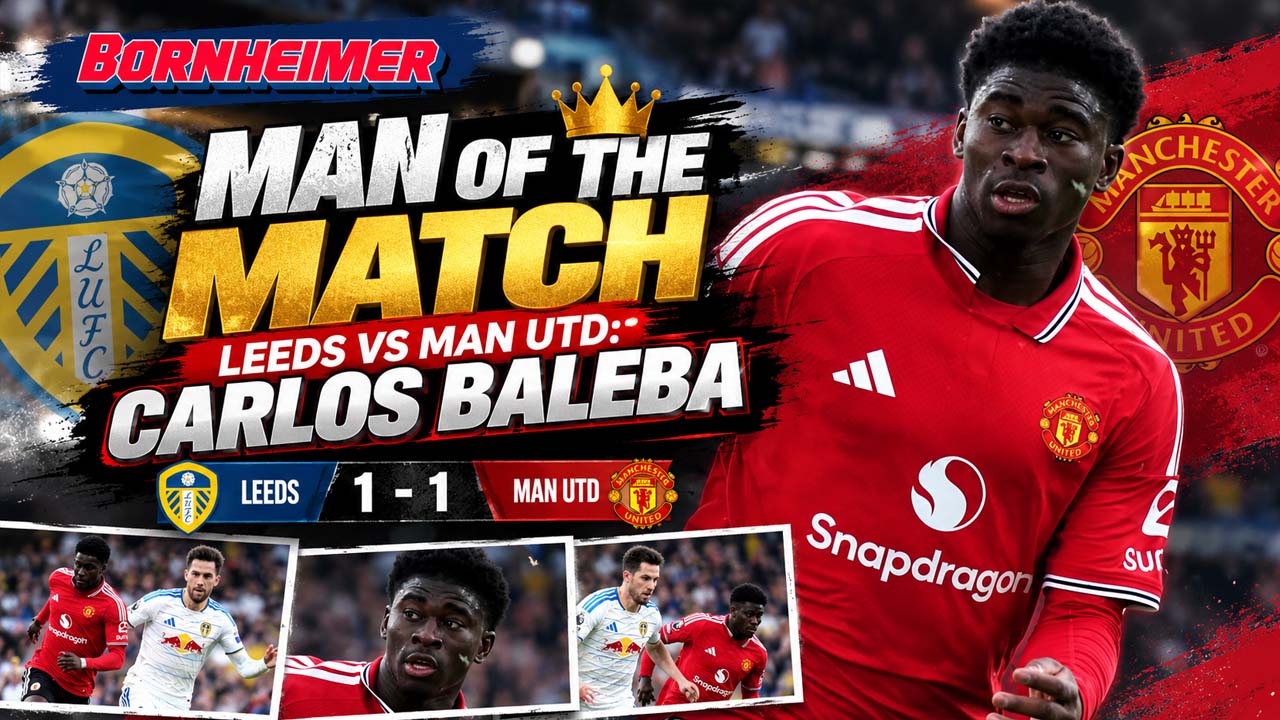
Bornheimer – Carlos Baleba provided a bright spot as Manchester United drew 1-1 with Leeds United at Elland Road. The midfielder earns our Man of the Match recognition for his influence in possession and work protecting the defence. Bryan Mbeumo opened the scoring after 35 minutes, but Dominic Calvert-Lewin equalised early in the second half. Consequently, United left with a point rather than the victory they wanted. Baleba’s contribution offered encouragement despite that disappointment. He helped connect different phases of play and gave United a stronger presence in midfield. Importantly, this assessment concerns his overall influence rather than goals or assists. His performance illustrates how a midfielder can stand out without delivering the game’s most obvious attacking moment.
Baleba Gives United a Stronger Midfield Presence
The central area demanded both physical strength and clear decision-making. Baleba brought those qualities through his mobility and willingness to remain involved when United faced pressure. His value came from helping the team function between defence and attack, rather than operating solely in either phase. When a midfielder can receive the ball and withstand a challenge, teammates gain another option for building possession. Similarly, good positioning can make an opponent’s next pass more difficult. Those contributions rarely dominate a highlights package, yet they shape the rhythm of a match. In Baleba’s case, they provided a useful foundation. However, one encouraging individual display could not resolve every problem affecting United’s collective control.
Composure in Possession Matters Beyond Passing Numbers
Baleba’s ability to handle pressure was an important part of his performance. Receiving the ball in midfield brings a different challenge from collecting it with space near the touchline. Opponents can approach from several directions, while the next pass often needs an immediate decision. His strength on the ball helped United maintain connections through the middle. Nevertheless, no verified passing percentage is needed to explain that role. The relevant point is how a player’s composure supports the team around him. A secure midfield option can help defenders avoid rushed clearances and allow attacking players to maintain their positions. Baleba supplied elements of that stability, even though United did not consistently turn possession into sustained dominance.
Defensive Awareness Adds to His Influence
Baleba also contributed through his reading of developing attacks. Protecting a defence involves more than winning tackles after danger has already arrived. It requires recognising passing routes, adjusting position, and deciding when to challenge. His defensive contribution therefore deserves consideration alongside his work with the ball. At the same time, describing him as influential does not mean United were secure throughout the contest. Leeds still found ways to threaten and eventually equalised. The distinction matters: an effective midfielder can improve a team’s balance without eliminating every weakness. In my view, Baleba’s performance was encouraging because he offered help in both directions. That versatility gave United something useful in a match they struggled to control completely.
Mbeumo Finishes a Well-Worked Opening Goal
United’s breakthrough arrived in the 35th minute through Bryan Mbeumo. Youri Tielemans combined with Amad Diallo on the right before supplying a low delivery. Mbeumo then finished into the bottom-left corner to give the visitors the lead. The move showed the value of coordinated attacking play rather than relying on an isolated individual effort. However, it should not be used to invent a direct goal contribution for Baleba. His case for recognition rests on his broader midfield work. United had gained the advantage, but the goal did not settle the contest. They still needed to manage Leeds’ response and protect their lead after the interval. That second task ultimately proved beyond them.
Calvert-Lewin’s Equaliser Changes the Contest
Leeds restored parity in the 51st minute following an Anton Stach corner. Tarik Muharemovic won the aerial contest, and the ball reached Dominic Calvert-Lewin, who converted the opportunity. The sequence exposed United’s inability to deal with the set-piece situation. It also changed the demands of the match, leaving the visitors searching for another breakthrough. From an analytical perspective, the equaliser highlights why midfield performance and team defending need separate evaluation. Baleba could contribute positively in open play while United still suffered from a collective lapse elsewhere. Nevertheless, conceding from a corner remained costly. After establishing a first-half lead, United allowed Leeds back into the game and could not recover the advantage.
A Late Scare Underlines United’s Remaining Problems
The closing stages offered another reminder that United had not fully secured the match. In added time, a Senne Lammens error presented Stach with an opportunity. United’s defence blocked the attempt, preserving the draw. That escape prevented an already frustrating afternoon from becoming a defeat. However, it also reinforced the limits of judging the team through one player’s positive contribution. Baleba’s influence did not translate into complete control across the pitch. United still needed better execution in decisive situations, both when defending and pursuing a winner. The final score therefore reflected a mixed performance. There were individual reasons for encouragement, but the visitors could not produce enough collective authority to turn their lead into three points.
Also Read : Indonesia Ranks Fourth Among the World’s Friendliest Countries in 2026
Baleba Offers Encouragement Without Hiding the Result
Carlos Baleba’s Man of the Match case rests on balance, composure, and involvement across different phases. He gave United a stronger midfield platform without scoring or assisting. That makes his performance worth recognising, especially in a game where the result overshadowed several positive moments. Still, the assessment should remain proportionate. United drew 1-1, surrendered their advantage, and survived a late chance. One player’s display cannot erase those facts or guarantee a wider improvement. The more useful question is whether Baleba can repeat this level while the team becomes more coordinated around him. If that happens, his contribution may become easier to convert into victories. At Elland Road, he offered a promising midfield performance within another incomplete United display.