Arteta Remains on the Pitch as City Celebrate: A Statement of Respect Amid Defeat
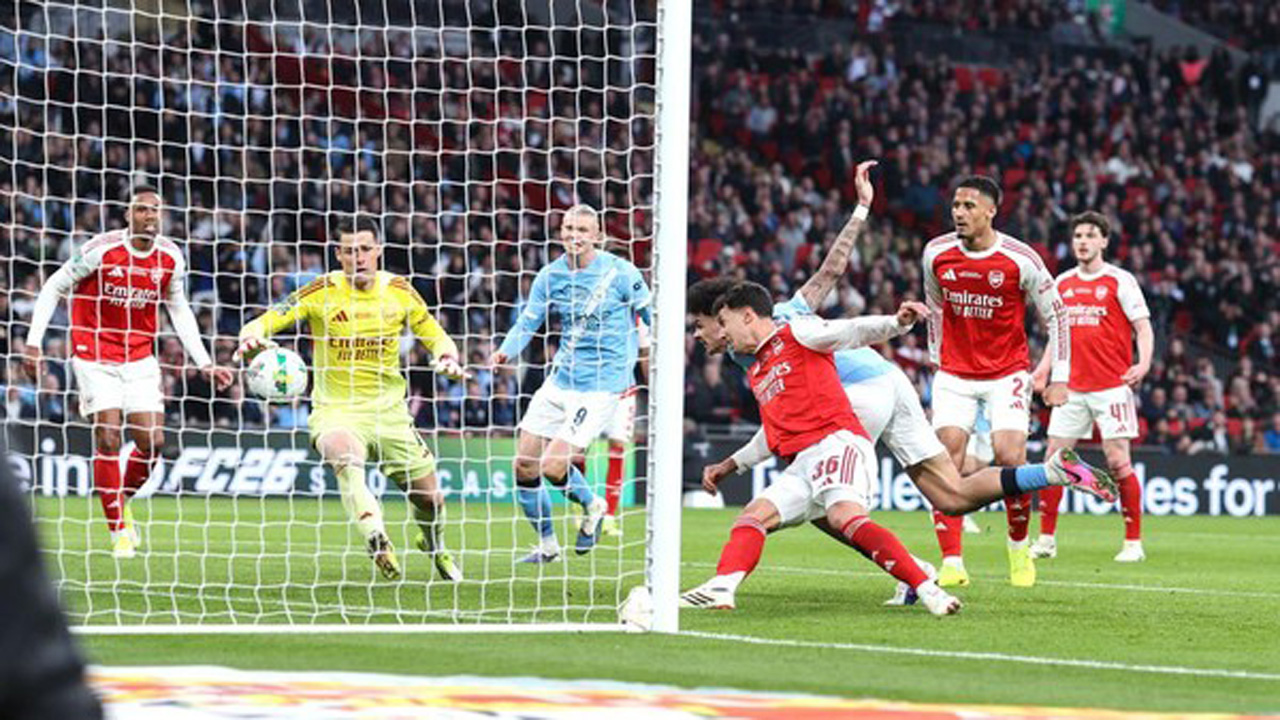
Bornheimer – The 2026 Carabao Cup Final at Wembley Stadium delivered more than just a result; it offered a powerful emotional narrative that extended beyond the final whistle. Arsenal’s 0-2 defeat to Manchester City marked another missed opportunity for silverware, yet the post-match moment involving Mikel Arteta quickly became one of the most talked-about aspects of the evening. In a sport often defined by results, this scene highlighted something deeper—character under pressure.
The match itself unfolded with intensity, as both teams displayed urgency and tactical discipline. Manchester City, however, proved more efficient in front of goal, capitalizing on key moments that ultimately decided the contest. Arsenal showed structure and intent, but lacked the cutting edge required at such a high level. As the final whistle echoed across Wembley, contrasting emotions filled the stadium—jubilation on one side, disappointment on the other.
What followed, however, set this final apart from many others. Instead of immediately heading to the dressing room, Arteta chose to remain on the pitch while City prepared to lift the trophy. This decision drew attention not only because it was unusual, but because it carried symbolic weight. It was a quiet yet powerful acknowledgment of both defeat and respect.
Moments like these remind audiences that football is not solely about winning. It is also about how individuals and teams respond when things do not go their way. In this case, Arteta’s presence on the pitch transformed a routine post-match scene into a reflection of professionalism and dignity.
Arsenal’s Defeat to Manchester City
Arsenal’s loss to Manchester City can be analyzed through both tactical and psychological lenses. From a tactical standpoint, City demonstrated superior composure and precision. Their ability to control key phases of the game, combined with clinical finishing, ultimately separated them from Arsenal. Despite The Gunners’ structured approach and pressing efforts, they struggled to convert opportunities into tangible results.
Arsenal did not lack effort or organization. In fact, their gameplay reflected a team that has grown significantly over recent months. However, finals often demand more than just structure—they require moments of brilliance and mental sharpness. Manchester City, with their experience in high-stakes matches, managed these moments more effectively.
Also Read : When a Drink Turns Dangerous: The Hidden Risk of Methanol Poisoning Travelers Must Know
Psychologically, the pressure of a final can weigh heavily on any team. Arsenal, still in the process of establishing themselves as consistent title contenders, faced the challenge of maintaining composure under immense expectations. This match exposed areas that still need refinement, particularly in handling decisive moments.
Still, reaching the final itself is an achievement worth acknowledging. Arsenal’s journey to Wembley demonstrated resilience and progress, reinforcing their position as a competitive force in English football. While the defeat stings, it also provides valuable lessons that could shape their future performances.
Ultimately, losses of this nature often serve as turning points. The way Arsenal processes and responds to this setback will play a crucial role in defining the remainder of their season.
Arteta’s Decision to Remain on the Pitch
Mikel Arteta’s choice to stay on the pitch during Manchester City’s trophy presentation stood out as a rare act in modern football. In most cases, defeated teams retreat quickly, avoiding the painful sight of their opponents celebrating. Arteta, however, took a different path—one rooted in principle rather than emotion.
According to Arteta, the decision was about respect. He believed that acknowledging the winner’s achievement was part of the game’s unwritten code. By remaining on the pitch until the trophy was lifted, he demonstrated a level of professionalism that transcends competition. It was not about diminishing Arsenal’s disappointment, but about honoring the integrity of the sport.
He also made it clear that there are boundaries. Once the formal trophy lift concluded and celebrations intensified, Arsenal exited the pitch. This balance allowed the team to show respect without prolonging their discomfort unnecessarily. It was a measured approach, reflecting both emotional intelligence and leadership.
Arteta’s actions also sent a message to his players. In moments of defeat, behavior matters just as much as performance. By modeling composure and respect, he reinforced values that can shape the team’s identity in the long term.
In an era where reactions are often immediate and emotionally driven, this gesture stood as a reminder that leadership is often defined by restraint and clarity of purpose.
An Uncommon Gesture in Modern Football
Gestures like Arteta’s are increasingly rare in today’s competitive football landscape. The intensity of the sport, combined with high expectations from fans and media, often leads teams to prioritize emotional recovery over symbolic acts of sportsmanship. This is why his decision resonated so strongly.
Remaining on the pitch required confronting the reality of defeat head-on. It meant witnessing the opponent’s joy while managing internal disappointment. For many, this would be an uncomfortable experience, yet Arteta embraced it as part of the professional responsibility that comes with the game.
The public reaction was mixed but largely positive. Many praised the gesture as a refreshing display of respect, while others expressed surprise at its rarity. Media outlets highlighted the moment as one of the defining images of the final, shifting part of the narrative away from the result itself.
Beyond immediate reactions, this act carries broader implications. It challenges the notion that competition must overshadow mutual respect. Instead, it suggests that both can coexist, even in emotionally charged situations.
Arteta’s decision also reinforces his reputation as a thoughtful leader. He is not solely focused on tactics and results, but also on the values that underpin success. In doing so, he contributes to a broader conversation about what professionalism truly means in modern football.