Javier Tebas Says Gianni Infantino Era Is Over as FIFA Leadership Faces Growing Pressure
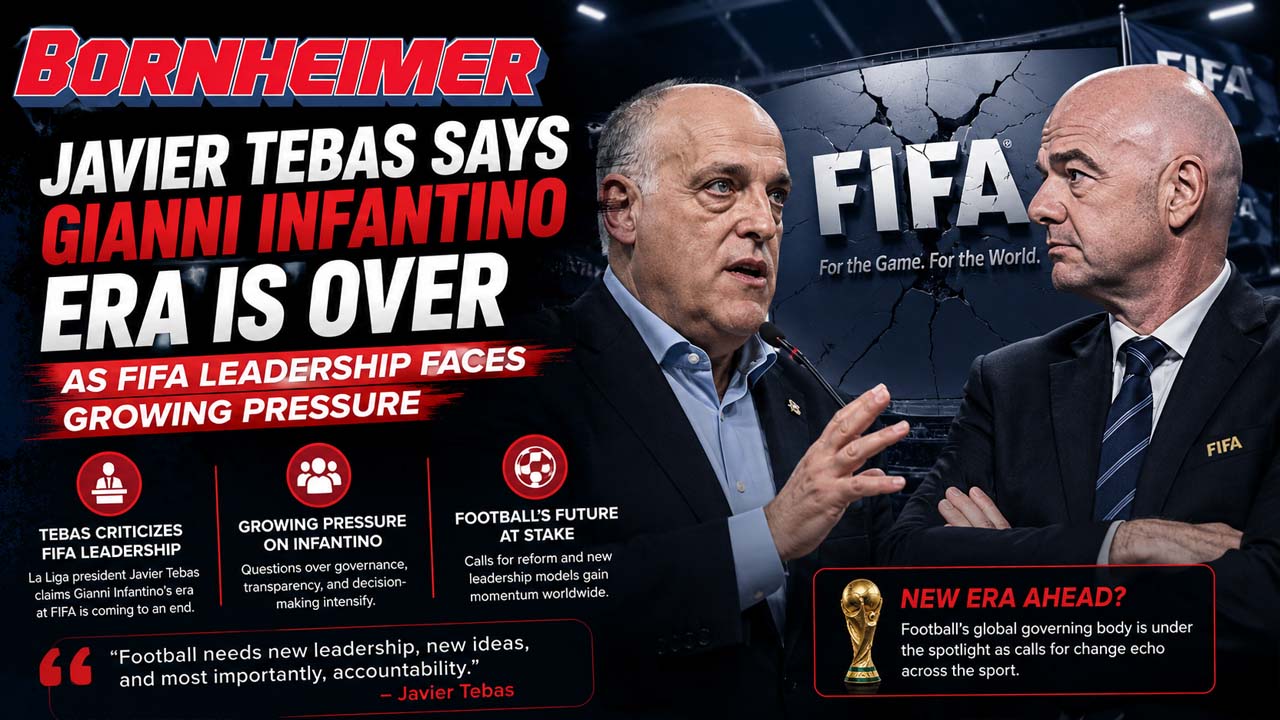
Bornheimer – Gianni Infantino FIFA leadership has come under renewed criticism after La Liga president Javier Tebas questioned whether the current FIFA era should continue. Speaking in an interview with Le Monde on August 5, 2026, Tebas argued that world football needs more than minor adjustments at the top. Instead, he believes significant governance changes are necessary. His comments reflect a wider debate about the balance between international competitions and domestic leagues. Moreover, Tebas has repeatedly defended national competitions when discussing the expansion of the global football calendar. He believes domestic leagues remain essential to the identity and economic structure of the sport. Therefore, his latest criticism goes beyond a personal disagreement with Infantino. It raises broader questions about who should influence major decisions in world football. As tensions increase, the debate could become an important issue surrounding FIFA’s future direction and its relationship with domestic competitions.
Tebas Believes the Infantino Era Has Run Its Course
Tebas used particularly strong language when discussing Infantino’s position. According to the La Liga president, the current leadership era has already gone on long enough. His argument focuses heavily on the direction FIFA has taken under Infantino. In particular, Tebas believes some international projects could place unnecessary pressure on domestic football. Expanded tournaments can generate considerable commercial interest. However, they can also create scheduling problems for clubs, players, and national leagues. Consequently, Tebas sees the issue as part of a wider struggle over football’s future structure. His criticism suggests that growth should not simply be measured through the number or size of international competitions. Instead, he wants decision-makers to consider how those changes affect established domestic ecosystems. From that perspective, the dispute surrounding Gianni Infantino FIFA leadership is also a debate about priorities. FIFA wants to strengthen its global competitions, while domestic stakeholders want their competitions protected from an increasingly crowded calendar.
The Debate Goes Far Beyond Gianni Infantino Himself
Interestingly, Tebas has made clear that replacing one individual would not automatically solve FIFA’s problems. In his view, structural reform matters just as much as leadership change. That distinction is important because international football involves a complicated network of federations, confederations, leagues, clubs, players, and commercial partners. Each group has different priorities. Therefore, changing the president without reviewing the decision-making process could leave many existing tensions unresolved. Tebas wants a governance model that gives stakeholders greater involvement in major decisions affecting the football calendar and commercial landscape. Furthermore, transparency remains central to his criticism. Domestic leagues want clearer consultation when international tournaments could directly influence their schedules or revenues. This argument gives Tebas’ comments a broader significance. Rather than presenting the dispute simply as Tebas against Infantino, it becomes a conversation about how global football should operate. Ultimately, any lasting reform would require cooperation between organizations that have frequently disagreed over their competing interests.
Domestic Leagues Fear Losing Space in a Crowded Calendar
The football calendar has become one of the most sensitive subjects in the sport. Clubs already balance domestic leagues, national cups, continental competitions, international breaks, and expanded global tournaments. Adding more fixtures creates obvious commercial opportunities. At the same time, however, it raises questions about player recovery and the long-term value of existing competitions. Tebas has consistently argued that domestic leagues should remain at the heart of professional football. They provide weekly competition, local rivalries, supporter traditions, and much of the industry’s recurring revenue. Therefore, any significant expansion of FIFA competitions can trigger resistance from league administrators. The debate surrounding Gianni Infantino FIFA leadership reflects this tension clearly. FIFA naturally seeks to develop tournaments under its authority, while leagues want enough space to maintain their own sporting products. Neither concern exists in isolation. If the calendar becomes overloaded, players could face heavier physical demands. Meanwhile, broadcasters and supporters could eventually struggle with an increasingly congested schedule.
Also Read : Demi Moore Shares Sweet Moments From Tallulah Willis’ Wedding Dress Fittin
FIFA’s Commercial Strategy Adds Another Layer to the Dispute
Commercial strategy has also become part of the discussion surrounding FIFA’s direction. Tebas’ latest criticism arrived after reports concerning FIFA’s plans for new commercial structures involving external investment. For football organizations, such projects can provide new sources of capital and help competitions expand internationally. Nevertheless, they also create questions about control, transparency, and long-term priorities. This is particularly relevant when commercial growth influences sporting calendars. A new competition can appear attractive financially, yet clubs must still provide players and accommodate additional fixtures. As a result, decisions made at international level can have consequences throughout the football pyramid. Tebas appears to believe those affected should receive a meaningful role in the process. His position also reflects a wider concern within professional football: financial expansion should not automatically determine sporting policy. In practice, balancing both objectives is difficult. FIFA operates globally, whereas domestic leagues protect regional competitions. Finding common ground will therefore require more than simply increasing revenue or introducing new tournaments.
European Resistance Could Shape the Next Political Battle
Pressure on FIFA becomes more significant when criticism extends beyond individual administrators. According to the information surrounding the dispute, concerns about Infantino have also emerged from sections of European football. However, criticism from Europe alone does not determine the future of a FIFA president. FIFA is a global organization whose political structure gives national associations from every region an important voice. Consequently, support across Africa, Asia, the Americas, Oceania, and Europe can shape leadership contests very differently from debates within UEFA alone. This makes Gianni Infantino FIFA leadership a complicated political subject. A leader facing strong criticism in one region can still retain substantial support elsewhere. Moreover, national associations may evaluate FIFA leadership according to development funding, tournament opportunities, infrastructure programs, and regional priorities. Therefore, predicting a leadership transition based solely on European opposition would be premature. The next phase will depend on whether criticism spreads across confederations and whether a credible alternative vision for FIFA governance eventually emerges.
A FIFA-UEFA Confrontation Would Carry Major Consequences
Any serious confrontation between FIFA and European football authorities could create consequences far beyond boardroom politics. UEFA competitions contain many of the world’s richest clubs, while European national teams remain central to FIFA’s biggest tournaments. Therefore, cooperation between the organizations is crucial to the commercial and sporting stability of global football. A prolonged dispute could affect calendars, player availability, competition planning, and negotiations between governing bodies. Nevertheless, dramatic scenarios should be treated carefully unless formally confirmed by the organizations involved. Political pressure does not automatically mean a split will occur. In many previous football disputes, strong public statements have eventually been followed by negotiation. That possibility remains relevant here. FIFA and European stakeholders have powerful incentives to find workable compromises because neither side benefits easily from sustained institutional conflict. Still, Tebas’ intervention demonstrates how frustrated some domestic football figures have become. The disagreement is increasingly about who controls the direction of the sport rather than one isolated competition or policy.
Infantino Still Has a Global Political Base to Consider
Despite Tebas’ strong criticism, declaring Infantino politically finished would be premature. FIFA leadership is determined through a global voting structure rather than public opinion within Europe’s biggest leagues. This distinction matters greatly. Infantino has built relationships across numerous national associations during his presidency, while FIFA’s development programs have considerable importance for smaller football nations. For many federations, infrastructure funding and opportunities to participate in international competitions can carry greater weight than disagreements involving major European leagues. Therefore, Gianni Infantino FIFA leadership must be assessed through a global lens. Tebas may influence the European debate, but any genuine leadership challenge would need wider international momentum. Furthermore, a potential successor would require enough credibility to unite federations with very different interests. That is not an easy task. World football does not operate as a single political bloc. Instead, its governance depends on alliances that can shift according to regional priorities, financial interests, and visions for how the sport should develop.
The Bigger Question Is How World Football Should Be Governed
Ultimately, Tebas’ attack places a much larger question on the table: what should FIFA governance look like in the next era? Changing the president may create a symbolic break, but structural tensions would remain. International tournaments will still compete for calendar space. Domestic leagues will continue protecting their commercial value. Players will demand reasonable workloads, while clubs will seek greater influence over competitions involving their employees. At the same time, smaller football nations will expect FIFA to continue investing in global development. Those interests are difficult to balance. Therefore, the future of Gianni Infantino FIFA leadership represents only one part of a broader debate. Tebas’ call for systemic reform could become more important than his criticism of Infantino personally. If pressure continues to grow, stakeholders may eventually have to reconsider how major decisions are negotiated and communicated. Whatever happens next, the dispute highlights a fundamental challenge for modern football: expanding globally without weakening the domestic competitions that built much of the sport’s identity.