Manchester United Let Victory Slip as Carrick Pinpoints What Went Wrong
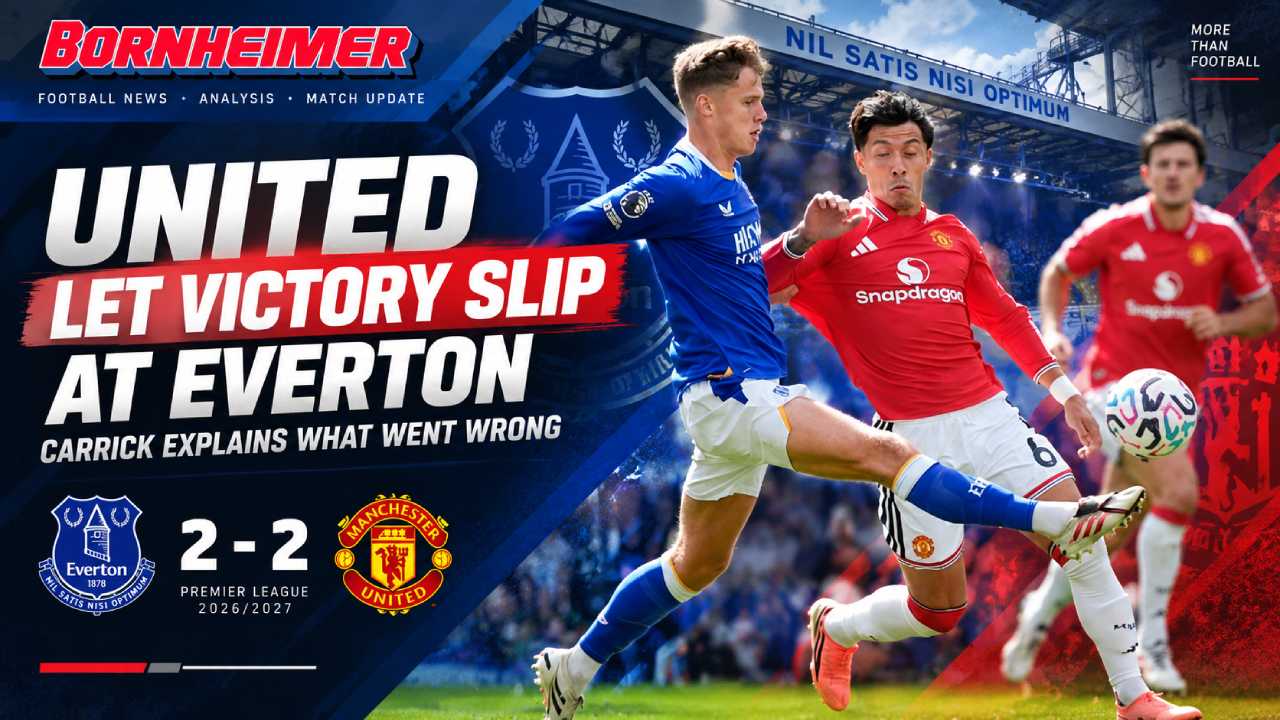
Bornheimer – For Manchester United, the frustrating part of the trip to Everton was not a lack of attacking threat. It was how quickly a promising position disappeared. United had enough opportunities to leave with three points, yet the final minutes changed everything. Michael Carrick believes his team simply failed to finish the job when the match was under control. The Manchester United vs Everton clash eventually ended 2-2, leaving United with the uncomfortable feeling that they had allowed victory to slip away. There were encouraging moments, especially after the break. However, the game also exposed an issue that could become costly over a long season. Creating chances is important, but controlling decisive moments matters just as much.
A Quiet First Half Gave Way to a Much Faster Contest
The opening 45 minutes offered little indication of the drama that would follow. Both teams competed intensely, although neither found the breakthrough before halftime. United then returned with greater purpose. Bryan Mbeumo provided the spark by scoring early in the second half. His goal changed the rhythm of the contest and gave Carrick’s side something to protect. More importantly, United appeared capable of adding another goal. Their attacking movements became sharper, while Everton had to take greater risks. At that stage, the visitors seemed to have found the right balance. Yet football rarely rewards a team simply for looking comfortable. Without another goal to create breathing room, United remained vulnerable to one Everton response.
Also Read: India Warns Residents Against Eating Strange Fish After Nepal Floods
Bryan Mbeumo Gave United the Momentum They Needed
Mbeumo’s contribution offered another glimpse of the attacking qualities United hope to build around. His goal arrived at an important moment and immediately placed pressure on Everton. Instead of chasing the game, United could dictate more of the tempo. That advantage should have made the following period easier to manage. However, the visitors never completely removed Everton from the contest. Their lead remained narrow, which meant a single mistake or successful Everton attack could change everything. That is exactly what eventually happened. From Carrick’s perspective, this period may have been the biggest missed opportunity. United were dangerous enough to take control, but they never converted that superiority into a comfortable advantage.
Everton Refused to Let the Match Drift Away
Everton gradually found a route back into the game. With ten minutes of normal time remaining, Tyrique George delivered the equaliser and changed the atmosphere immediately. Suddenly, United were no longer protecting a lead. They had to respond. To their credit, Carrick’s players did not retreat after conceding. Instead, they pushed forward and found another goal only five minutes later. Luke Shaw delivered the cross, while Benjamin Sesko finished the move with a header. At 2-1, United appeared to have produced the perfect response. The timing made the goal feel even more decisive. With only a short period left, the visitors needed composure rather than another dramatic sequence.
Benjamin Sesko’s Header Looked Like the Winning Moment
Sesko’s late header should have been the defining image of the evening. It combined Shaw’s delivery with the striker’s movement inside the penalty area. More importantly, the goal came after Everton had already fought their way back into the contest. Regaining the lead under those circumstances showed character. Carrick later suggested that the second United goal deserved to become the winner. It is difficult to disagree when considering the timing. Once ahead again in the 85th minute, United did not need to transform their approach completely. They simply needed to manage the remaining minutes with greater precision. Instead, the closing stages became another reminder that protecting a narrow advantage requires concentration until the final whistle.
The Final Minutes Changed the Entire Story
Ainsley Maitland-Niles ensured the evening ended very differently from what United had expected. His late equaliser made it 2-2 and rescued a point for Everton. For the hosts, it was a reward for refusing to surrender. For United, the same moment represented two points slipping away. That contrast explains why the result felt more frustrating than an ordinary draw. United had already recovered from Everton’s first equaliser and placed themselves back in front. Yet they could not complete the final part of the job. Matches like this often reveal the difference between playing well and managing a game well. United showed enough quality to score twice. However, they lacked the control required to turn those goals into victory.
Carrick Saw Plenty of Positives Despite the Draw
Carrick did not describe United’s overall display as poor. Instead, his assessment was more balanced. He felt the team produced some strong football during different phases and regularly created problems for Everton. The manager was particularly pleased with the quality of United’s two goals. Nevertheless, he also acknowledged weaker periods at the beginning and end of the match. Those details are important because they provide a clearer picture of his frustration. United were not outplayed for the entire evening. In fact, they spent enough time looking dangerous to believe they should have won. The disappointment came from failing to turn those positive stretches into a complete performance. For Carrick, improvement now depends on making those good moments last longer.
United’s Bigger Problem Was Failing to Close the Game
Carrick’s main concern was not simply that Manchester United conceded twice. His frustration centered on how the team handled a favourable position. Once United regained the lead, the priority should have been controlling the final stages. Instead, Everton were given enough space and opportunity to respond again. This is where game management becomes crucial. Strong teams do not always dominate every minute. However, they usually recognise when the match needs to slow down. Possession can be protected more carefully, defensive distances can become tighter, and unnecessary risks can be reduced. United did not execute that final phase well enough. As a result, an evening that could have strengthened their momentum became another lesson in managing pressure.
There Is a Difference Between Attacking Well and Winning Well
The draw also highlighted an important distinction for Carrick’s developing side. Attractive attacking football can create excitement, but successful teams need another layer. They must understand how to protect an advantage when momentum changes. United demonstrated attacking quality through Mbeumo and Sesko. Shaw also contributed with an important delivery. Still, those moments were ultimately not enough. In my view, this is the most useful takeaway from the Everton match. Carrick does not necessarily need his team to become more defensive. Instead, United need better awareness of when to attack aggressively and when to control the tempo. Finding that balance could turn future draws into victories.
Carrick Now Has a Clear Lesson to Take Forward
Early-season matches often reveal problems that are easier to fix before they become habits. For Manchester United, the Everton draw provides Carrick with a straightforward lesson. His players can create chances and respond after setbacks. What they still need is greater authority when a match enters its decisive stage. That development will require more than defensive organisation. Communication, decision-making, possession, and emotional control all become important during the closing minutes. Carrick’s comments suggest he understands that distinction. Rather than focusing entirely on the goals conceded, he pointed toward United’s inability to finish the contest properly. That perspective could prove valuable as the season develops.
Champions League Return Offers an Immediate Chance to Respond
United will not have much time to dwell on the disappointment. Their attention now turns toward Old Trafford, where Sabah FK awaits in the opening League Phase fixture of their Champions League campaign. The occasion carries additional significance as United prepare for their return to European competition. A strong response would quickly shift the mood after the Everton draw. More importantly, Carrick will want to see whether his players have absorbed the lesson from their previous match. Creating a lead is only part of the challenge. Protecting it until the final whistle is what ultimately separates an encouraging performance from a valuable victory.
Manchester United Must Turn Good Moments Into Complete Performances
The Manchester United vs Everton draw was frustrating precisely because United showed enough quality to win. Mbeumo gave them the breakthrough, while Sesko restored the advantage late in the game. Nevertheless, Everton found an answer on both occasions. Carrick’s analysis therefore goes beyond one defensive mistake or one missed opportunity. His team needs to become more ruthless when the match is there to be won. That does not mean chasing goals recklessly. Instead, it means recognising decisive moments and controlling them intelligently. United already displayed encouraging attacking signs at Everton. Their next challenge is making sure those moments translate into results.