World Cup
bellingham, carlosqueiroz, englandfootball, englandvsghana, FIFA, fifarules, fifaworldcup2026, FootballControversy, FootballNews, footballupdates, ghanafootball, gianniinfantino, jordanayew, JudeBellingham, miguelalmiron, redcardcontroversy, soccernews, var, worldcup2026, worldcupnews
Fabrico Nalren
0 Comments
Why Jude Bellingham Avoided a Red Card After Covering His Mouth During a Conversation with Jordan Ayew
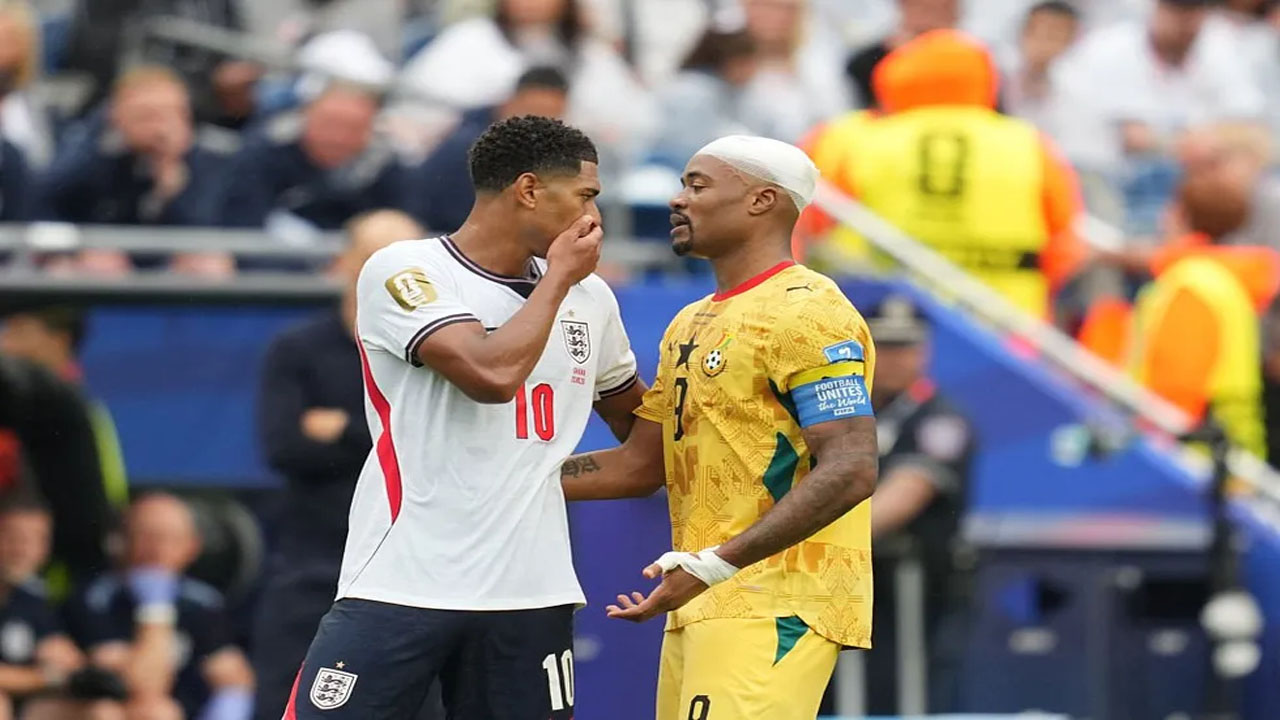
Bornheimer – Jude Bellingham found himself at the center of controversy following England’s goalless draw against Ghana in the 2026 FIFA World Cup. Cameras captured the England midfielder covering his mouth while speaking to Ghana forward Jordan Ayew during the match. The incident immediately sparked debate among fans and pundits because FIFA recently introduced stricter regulations regarding players who hide their mouths while talking on the field. Despite the attention surrounding the moment, Bellingham escaped any punishment and completed the match without receiving a card. The situation raised important questions about how FIFA’s new rules are interpreted and applied during high-profile international tournaments.
The Incident That Sparked Worldwide Discussion
During a tense Group Stage encounter between England and Ghana, television cameras focused on a brief exchange between Jude Bellingham and Jordan Ayew. While speaking, Bellingham appeared to cover his mouth with his hand. As clips circulated across social media platforms, many supporters immediately questioned whether the England star had violated FIFA’s newly introduced communication regulations. Consequently, the moment became one of the most discussed talking points after the final whistle despite the match ending without goals.
FIFA Introduced New Regulations for Greater Transparency
Ahead of the 2026 FIFA World Cup, football’s governing body implemented new guidelines aimed at promoting transparency and respect on the pitch. The rule specifically targets situations where players intentionally cover their mouths during confrontations. FIFA believes such gestures can conceal offensive language or inappropriate comments. Therefore, referees now have the authority to issue disciplinary action, including red cards, if they determine that the behavior occurs during a hostile exchange between players.
Also Read : First US-Iran Peace Talks End with Three Key Agreements and New Hope for Stability
The Inspiration Behind FIFA’s New Policy
The regulation emerged following several controversial incidents in professional football. FIFA President Gianni Infantino supported stronger measures after cases involving discriminatory or offensive language generated widespread criticism. According to FIFA officials, the objective is not to prevent normal communication. Instead, the organization wants to discourage players from hiding potentially abusive remarks behind gestures that make conversations difficult to monitor. As a result, referees now assess both the action and the context before making decisions.
Context Remains the Most Important Factor
One crucial aspect of FIFA’s regulation is the emphasis on context. Covering a mouth does not automatically result in punishment. Officials must determine whether the conversation appears aggressive, confrontational, or offensive. If players engage in a friendly discussion, tactical exchange, or harmless interaction, the gesture alone does not violate the rules. Therefore, referees receive guidance to evaluate the entire situation before considering disciplinary measures.
Why Jude Bellingham Was Not Punished
In Bellingham’s case, match officials concluded that no confrontation occurred between him and Jordan Ayew. Their interaction appeared calm and non-hostile throughout the exchange. Furthermore, there was no evidence suggesting abusive language or provocative behavior. Because of this assessment, the referee saw no reason to intervene. FIFA’s guidelines specifically allow players to cover their mouths during ordinary conversations, provided the discussion remains respectful and peaceful.
VAR Had No Reason to Intervene
Video Assistant Referee officials also reviewed the situation but found no grounds for involvement. Under current protocols, VAR only steps in when there is clear evidence of a serious offense or potential red-card incident. Since the exchange between Bellingham and Ayew lacked signs of aggression, the technology team allowed play to continue uninterrupted. Consequently, the incident remained a talking point for spectators rather than an official disciplinary matter.
Comparisons with Miguel Almiron’s Red Card
The contrast between Bellingham’s situation and a previous case involving Paraguay’s Miguel Almiron highlights FIFA’s approach. Almiron became one of the first players punished under the new rule after covering his mouth during a heated confrontation with Turkey’s Mert Muldur. Officials believed he attempted to conceal offensive comments amid a larger on-field dispute. Therefore, the referee issued a red card and later authorities imposed an additional suspension. The circumstances differed significantly from Bellingham’s calm exchange with Ayew.
Additional Tension Involving Bellingham During the Match
Although he avoided punishment for the conversation with Ayew, Bellingham still experienced a tense evening. Reports suggested that he became involved in a verbal disagreement with Ghana head coach Carlos Queiroz during halftime. The confrontation allegedly followed a physical challenge involving Ghana defender Jerome Opoku. While the disagreement attracted attention, match officials did not consider the incident severe enough to warrant disciplinary action against the England midfielder.
Carlos Queiroz Criticized Match Officials
Following the match, Ghana manager Carlos Queiroz voiced frustration regarding several refereeing decisions. He questioned the effectiveness of VAR and argued that certain incidents deserved stronger punishment. In particular, Queiroz believed England benefited from favorable decisions throughout the game. His comments added another layer of controversy to an already intense contest. Nevertheless, FIFA officials maintained confidence in the referee’s handling of key moments.
FIFA’s Rule Balances Respect and Common Sense
The Bellingham incident demonstrates that FIFA’s new regulation focuses on behavior rather than simple gestures. While covering a mouth can attract attention, officials prioritize the nature of the interaction before issuing penalties. This approach allows players to communicate naturally while still discouraging abusive conduct. Ultimately, Bellingham avoided a red card because his conversation with Jordan Ayew showed no signs of hostility, proving that context remains the deciding factor under FIFA’s latest rules.